Showing posts with label Technology. Show all posts
Super thin solar cells
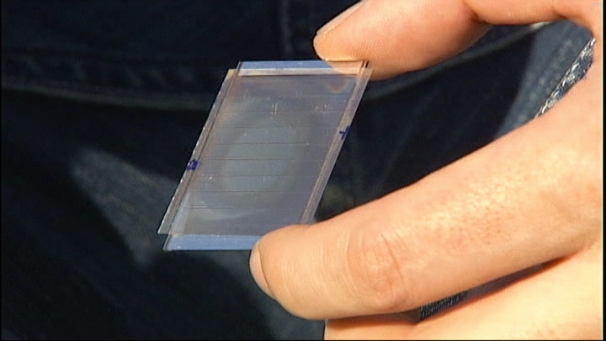
Tokyo - Austrian and Japanese researchers unveiled solar cells thinner than a thread of spider silk are flexible enough to wrapped around single human hair.
The total thickness of device is less than typical thread of spider silk :)
"You could attach the device to ur clothes like a badge to collect electricity [from the sun]... Elderly people who might want to wear sensors to monitor their health would not need to carry around batteries," it seems...
Tornadoes : How & Why it forms
Tornadoes are formed only under certain types of climatic conditions and that's the reason why tornadoes occur frequently in some parts of United States and not the rest. During spring, the climatic condition between the Rocky and Appalachian Mountains is very conducive for the formation of tornadoes. This is due the fact that moist, warm air from the Gulf of Mexico, collides with the dense, cool air of the mountainous regions. The states around this region are the most likely to face a tornado and therefore are called 'tornado alley'.
Tornadoes occur due to the collision of large volumes of air, having different temperatures. Collision mostly occurs in places where warm and cold air are present together. For a tornado to form, warm air has to be present at the bottom, while the cool air at the top. When warm air tries to rise up, a large updraft is formed, which can lead to a tornado, if the biometric air pressure under the updraft is very low.
Programmable smart sand is awesome
Researchers over at MIT are always working on things that seem impossible, yet somehow they make it work. A perfect example is the new little magnetic cubes that researchers at the University have designed that are able to communicate with each other and auto duplicate objects using a subtractive production algorithm. The little devices were created in MIT’s Distributed Robotics Laboratory at the Computer Science and Artificial Intelligence Laboratory.
The researchers hope that someday the system may be able to allow for the spontaneous formation of replacements for broken objects. The key to the system is a subtractive production algorithms that the researchers hope will enable the creation of “smart sand” that are self-sculpting reconfigurable robot cubes that distribute messages among themselves to re-create a three-dimensional object.
The process sounds somewhat similar to 3-D printing only rather than having to use an additive such as some sort of resin and a laser, the smart sand would be able replicate objects by carving them out of a larger mass of construction material using an original shape as a guide. The algorithm is being tested using “pebbles” are about 10 mm across with very basic microprocessors inside and magnets on four sides. Check out the video to get a better idea of how the system would work.
Oceans began warming 135 years ago
Temperature is one of the most fundamental descriptors of the physical state of the ocean
Beyond simply knowing that the oceans are warming, the results will help us answer a few climate questions," Roemmich was quoted as saying by LiveScience.
Scientists among the 200-member crew on board had taken 300 ocean-temperature profiles, or measurements at several depths in each spot, with pressure-protected thermometers and compared temperatures
It showed a 1.1-degree Fahrenheit (0.59-degree Celsius) rise in temperatures at the ocean's surface over the last 135 years, a result corroborated by a large body of sea-surface temperature data that goes back more than 100 years.
"That is a substantial amount of warming. Ocean warming has been previously linked to glacial melting and mass coral bleaching," Roemmich said.
Scientists have previously determined that nearly 90 per cent of the excess heat added to Earth's climate system since the 1960s has been stored in the oceans.
One issue with the Challenger data, Roemmich said, is that the scientists onboard didn't directly measure the depth of their thermometers; but measured only the length of the line extending the instruments into the water. Because of ocean currents, it's nearly impossible to get a line to be completely vertical in the water, resulting in an actual depth that is a little less than the full length of the line, he said.
"What you are then going to see is a temperature that is a little warmer than it would have been if the line has been perfectly vertical," he said, referring to the fact that temperatures are typically warmer at shallower depths
Subscribe to:
Posts (Atom)